You’re drawn to the calm of the water, but unsure what lakefront life in Lakeland really costs. That’s smart. Lake homes can deliver big lifestyle value, yet they come with unique expenses and rules that are different from non‑waterfront properties. In this guide, you’ll learn the real one‑time and annual costs to budget for, what permits and inspections to expect, and a practical checklist to use before you tour. Let’s dive in.
Lakeland lakefront basics
Lakeland sits among dozens of freshwater lakes, including Lake Hollingsworth, Lake Morton, Lake Parker, and Lake Wire. These are non‑tidal bodies, so you avoid saltwater corrosion, but you still manage lake‑specific issues like algae, aquatic weeds, water levels, and shoreline care. Lakefront parcels typically carry a price premium over similar off‑lake homes. The exact premium varies by the specific lake, view, dock access, lot size, and neighborhood. For current premiums, you or your agent should pull local MLS comps and check the Polk County Property Appraiser.
Many buyers prioritize dock access, boating, and lake views. Those perks often add both upfront and recurring costs. Plan your budget around the property’s actual structures and the lake’s maintenance needs.
One‑time purchase costs
When you put a lakefront home under contract, expect a few extra items at closing beyond a standard purchase.
- Elevation Certificate or survey: $500–$2,000 if needed for flood rating or to confirm boundaries and riparian rights.
- General home inspection with lakefront focus: $300–$800 for a standard inspection. Add specialized dock, lift, and seawall assessments as needed.
- Title and survey review for shoreline rights: confirm that the dock is included in the sale and whether it sits within your riparian area without encroachments.
These items help you understand flood risk, confirm ownership of lake improvements, and avoid surprises with permitting later.
Dock and seawall capital costs
If the property needs a new dock or major repair, costs can vary a lot by material, size, and access.
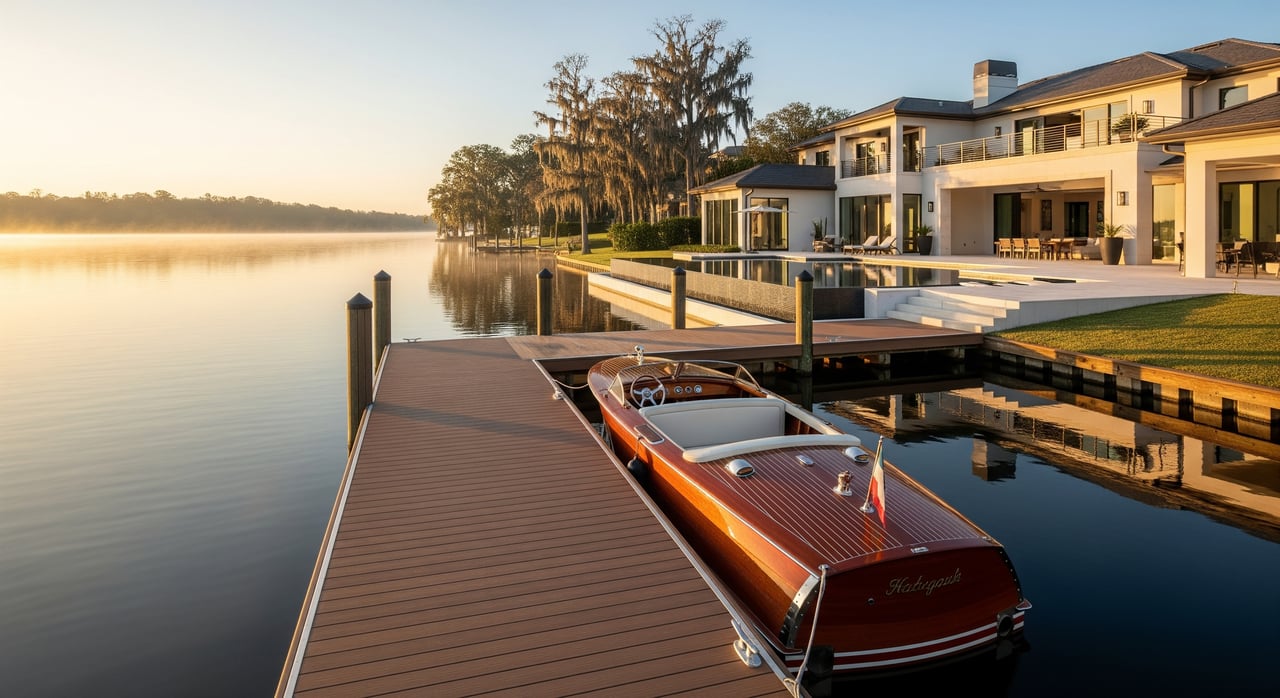
- Dock installation: roughly $5,000–$20,000 for simple floating wood designs. $10,000–$40,000 for fixed wood or piling docks. Composite or premium docks often run $15,000–$60,000 or more.
- Boat lifts: roughly $5,000–$20,000, based on capacity, power, and canopy.
- Seawall or bulkhead replacement: costs range from thousands for shorter runs into the tens of thousands for longer or complex sections. You will need a shoreline contractor’s assessment for a firm estimate.
- Permits and engineering: budget from a few hundred dollars to several thousand for city, county, and environmental permits.
Ask sellers for any recent dock or seawall permits and contractor invoices so you can evaluate condition and remaining life.
Permits in Lakeland and Polk
Before you modify a dock, rebuild a seawall, or add a lift, confirm who has jurisdiction.
- City of Lakeland Building and Permitting handles structures and electrical work within city limits.
- Polk County Permitting covers unincorporated areas outside city boundaries.
- Florida Department of Environmental Protection regulates work over sovereign submerged lands and may require state authorization.
- Southwest Florida Water Management District may require notification or permits for certain shoreline activities.
Your first step is to verify if the parcel is inside the City of Lakeland or in unincorporated Polk County. Fees and rules differ.
Insurance and flood coverage
Insurance is a major ongoing cost in Florida. Budget time to compare quotes and understand deductibles and exclusions.
- Homeowners insurance: Florida premiums are higher than many states due to windstorm and hurricane exposure. Policies often carry percentage wind or hurricane deductibles. Ask about named peril exclusions and whether the home has wind mitigation features.
- Wind mitigation credits: roof reinforcements, hurricane straps, and impact windows can lower premiums. Request any existing wind mitigation report.
- Flood insurance: standard homeowners insurance does not cover flood. If the home is in a FEMA Special Flood Hazard Area, lenders will require flood insurance. Many lakefront homes are not coastal but can still sit in or near flood zones. An Elevation Certificate can help refine premium costs.
Request the seller’s current homeowners and flood policy details and any Elevation Certificate early in due diligence.
Annual upkeep and utilities
Set a realistic yearly budget for lake‑related maintenance and operations.
- Dock and lift maintenance: routine cleaning, staining or sealing, hardware checks, and lift service often run several hundred to a few thousand dollars per year, depending on complexity and usage.
- Seawall monitoring: plan for small repairs as needed and long‑term replacement every few decades. Many owners set aside a reserve line each year.
- Boat ownership: factor in registration, insurance, annual service, fuel, and storage. Costs vary with boat size and usage.
- Property taxes and HOA dues: assessed values can be higher on the water. Some communities assess fees for lake management or shared docks.
- Utilities: lifts and dock lighting add modest electrical costs.
- Vegetation and weed control: periodic treatment or mechanical removal may be needed if growth limits access.
Your lake, your structures, and your boating plans will drive actual numbers. That is why local quotes matter.
Environmental and lake risks
Freshwater lakes in Florida experience natural cycles that affect daily life and maintenance.
- Algae and harmful algal blooms: blooms can limit recreational use and impact aesthetics. Ask for recent water quality reports and any advisories.
- Aquatic weeds and invasive species: hydrilla and water hyacinth can restrict access. If your shoreline needs frequent clearing, plan for recurring removal costs and check any permit needs.
- Shoreline erosion and water levels: seasonal shifts can stress docks and landscaping. Ask for the home’s water level history and any prior stabilization projects.
- Septic versus sewer: older or out‑of‑city homes may have septic. Budget for inspection, routine pumping, and potential upgrades.
- Public access and boat rules: confirm navigability, no‑wake zones, and boat size or horsepower limits for your specific lake.
Documented history from the seller and HOA or city programs will help you forecast future maintenance.
Buyer due diligence checklist
Use this list to structure your offer period and inspection timeline.
-
Title and survey
- Request a current boundary survey that shows the shoreline, dock, and any encroachments.
- Confirm deeded riparian rights and that the dock is included in the sale.
-
Permits and history
- Ask for permits and contractor invoices for any dock, lift, seawall, or shoreline work.
- Review seller disclosures for flooding, erosion, or prior claims.
-
Insurance
- Request copies of the current homeowners and flood policies with premiums.
- Ask for any Elevation Certificate and wind mitigation report.
- Get quotes from a local insurance agent before you finalize price.
-
Structural and environmental inspections
- Hire an inspector experienced with marine structures to evaluate dock pilings, decking, flotation, and lifts.
- If erosion or damage is visible, obtain a shoreline or engineering assessment.
- If on septic, order a septic inspection and pumping records.
-
Water quality and lake management
- Request recent water quality reports and any harmful algal bloom advisories.
- Ask who pays for weed control and whether the lake is managed by an HOA, city, or both.
-
HOA or community rules
- Review CC&Rs and meeting minutes for rules on docks, lifts, and boat use.
- Check for any pending special assessments related to lake projects.
-
Functional questions during tours
- Confirm water depth at the dock and typical seasonal changes.
- Verify electrical service to the dock and lift and who maintains it.
- Ask about year‑round accessibility.
Sample budget to plan
These figures are illustrative to help you frame a working budget. Always obtain local quotes for accuracy.
-
One‑time items at purchase
- Elevation Certificate or survey: $500–$2,000
- Detailed marine or structural inspection: $300–$1,000 or more
- Immediate dock safety repairs: $1,000–$10,000 or more, based on condition
- New dock and lift installation: $10,000–$50,000 or more, depending on materials and size
- Major seawall work: thousands to tens of thousands, based on length and soil conditions
-
Ongoing annual costs
- Incremental homeowners insurance premium: varies. Florida is higher on average, and wind coverage and deductibles matter.
- Flood insurance: varies by flood zone, elevation, and claims history.
- Dock and lift maintenance: $500–$3,000 per year for many residential setups
- Boat ownership: $1,000–$5,000 or more per year, depending on boat size and usage
- Reserve for big items: $1,000–$5,000 or more per year for future dock or seawall replacement
A simple planning tool is to add a conservative lake premium to your annual household budget. For many Lakeland buyers, $2,000–$8,000 per year is a reasonable starting range. Increase that figure if you own a large boat, have a long seawall or complex dock, or if your lake needs frequent vegetation control.
Next steps before tours
- Run preliminary homeowners and flood insurance quotes using the parcel ID and FEMA flood zone.
- Ask the listing agent for dock inclusion, permits, inspection reports, and any Elevation Certificate.
- Schedule a marine and dock inspection early in due diligence.
- If you plan to keep a boat, verify water depth, boat size limits, and lift capacity.
- If you plan to add or rebuild structures, contact City of Lakeland or Polk County, and consult SWFWMD and FDEP early on permitting and timelines.
- Build a reserve plan for long‑term shoreline and dock replacement cycles so you are never surprised.
Work with a local guide
A great lakefront purchase balances lifestyle and risk management. When you know the true costs, you can negotiate with confidence, choose the right lake for how you live, and protect your investment for years to come. If you want a clear plan from search to closing, connect with a local team that knows Lakeland’s lakes, permitting, and insurance landscape.
Have questions about a specific lake, dock type, or flood zone? Reach out to Elizabeth Willers for lake‑smart buyer guidance in Lakeland and Polk County.
FAQs
What are typical dock and lift costs for Lakeland lake homes?
- Expect roughly $5,000–$20,000 for a simple dock, $10,000–$40,000 for fixed wood or piling designs, $15,000–$60,000 or more for premium materials, and $5,000–$20,000 for a residential boat lift depending on capacity and features.
Do I need flood insurance for a lakefront home in Lakeland?
- If the home is in a FEMA Special Flood Hazard Area, lenders require flood insurance; even outside these zones, many owners choose coverage and use an Elevation Certificate to refine pricing.
Who permits docks, lifts, and shoreline work in Lakeland and Polk County?
- Inside city limits, the City of Lakeland permits building and electrical work; unincorporated areas fall under Polk County, and some projects require approvals from SWFWMD and the Florida Department of Environmental Protection.
How much should I budget yearly for lakefront upkeep?
- A common planning range is a $2,000–$8,000 annual lake premium to cover incremental insurance, dock and lift maintenance, vegetation control, and reserves, with higher budgets for large boats or extensive shoreline structures.
What should I ask about water quality and algae blooms before I buy?
- Request recent water quality reports, ask about any harmful algal bloom advisories, and confirm who manages weed control and lake maintenance costs for the specific lake.