You can picture the sunsets, the quiet dock mornings, and a home designed around your life. Building custom at Water’s Edge on Lake Gibson gives you that blend of privacy, water access, and design control. The path can feel complex, especially on the water, but the right plan simplifies every decision. In this guide, you will learn the lake facts that shape design, the permits you will need, realistic timelines and budgets, and a step-by-step checklist tailored to Lake Gibson. Let’s dive in.
Water’s Edge and Lake Gibson facts
Water’s Edge is a gated, luxury custom-lot community with oversized lake-access homesites and private dock potential on Lake Gibson. Explore community features and availability on the official site for Water’s Edge on Lake Gibson.
Lake Gibson is about 490 acres with a mean depth near 7 feet and a maximum depth around 20 feet. These depths influence dock length, boat type, and whether dredging is practical on a given lot. Review lake size, depth, and sampling history on the Polk Water Atlas Lake Gibson profile.
Water levels on Lake Gibson are tied to regional water-management infrastructure. Seasonal variations and control structures can affect shoreline elevations and dock-freeboard decisions. See the regional water-control context in the SWFWMD water control structures overview.
Shoreline realities to check
Depth and bottom conditions
Because Lake Gibson is relatively shallow, a bathymetry check off your lot is essential before you design a dock or boathouse. You want to confirm where safe operating depth begins for your preferred vessel and whether a boat lift makes more sense than a long fixed dock. Bottom type also matters for piling design and permitting.
Seawalls and slope
Walk the shoreline and document what exists. Is there a seawall or revetment, and what is the condition. Is the yard slope stable and vegetated. Early repair or replacement of a seawall is a common waterfront cost and may require engineered plans and permits.
Water quality alerts
Polk County and the Department of Health publish lake-health advisories. Lake Gibson has had harmful algal bloom alerts in recent years, which can influence short-term recreation and aesthetic expectations. Check current advisories on the Polk Water Atlas news page for Lake Gibson.
Design takeaways
- Expect dock design to respond to shallow mean depth. You may favor a boat lift and a measured approach to dock length.
- Plan for potential seawall work as a separate line item in your budget.
- Verify historic high and low water when setting lanai, pool deck, and dock elevations.
- Confirm any alerts before finalizing your outdoor living plans so you align landscaping and shoreline maintenance with lake conditions.
Permits for docks and homes
City vs county first stop
Start by confirming jurisdiction. If the lot is inside Lakeland city limits, the City of Lakeland Building Inspection team provides specific permit checklists for docks, seawalls, pools, and new homes. Review the current submittal lists and forms on the City of Lakeland Building Inspection checklists.
If the lot is in unincorporated Polk County, permitting runs through the Polk County Building Division. They outline required plans, flood documentation where applicable, and the general permitting sequence. See the Polk County Building Permitting guide.
State submerged lands rules
Activity waterward of the mean high-water line can involve state-owned submerged lands. Many private residential docks that preempt state bottom require a proprietary authorization such as a Letter of Consent under Florida Administrative Code Chapter 18-21. Review the Rule 18-21 framework and consult early if your dock extends over state bottom.
For environmental authorizations, the Florida Department of Environmental Protection manages Environmental Resource Permits and coordinates State 404 actions. You can research permit types and statuses in the FDEP permitting portal. Small, standard docks may qualify for general permits, while larger docks, dredging, or seawall footprint changes often trigger formal review.
District and federal coordination
Projects that affect regional hydrology or propose dredge and fill can bring the Southwest Florida Water Management District into review, and complex in-water work may also involve the U.S. Army Corps of Engineers. In practice, start with the city or county, then add state and district steps based on scope.
Typical submittals
- Boundary and topographic survey showing the waterline and easements.
- Bathymetry or soundings off the lot if you plan a dock.
- Engineered structural plans for docks and seawalls.
- Site plan, construction methods, and turbidity control notes.
- Flood documentation and geotechnical report as required by your local authority.
Timeline and budget basics
Typical schedule
For a luxury custom lakefront home, a common planning range from lot to move-in is 12 to 30 months. Site work and shoreline permitting can take 3 to 9 months depending on scope and reviews, followed by 9 to 18 months for custom-home construction. Industry guidance supports these broad ranges for custom builds. See national timelines in Angi’s custom home overview and confirm specifics with your builder.
Budget categories
Waterfront builds require clear cost buckets. Plan for:
- Lot acquisition and any developer credits.
- Site prep such as grading, access, erosion control, and tree work.
- Shoreline work including seawall repair or replacement and revetment.
- Dock, boat lift, and any dredging or disposal.
- Main house structure, envelope, mechanicals, roof, and interiors.
- Landscaping, hardscaping, pool or spa, and screen enclosure.
- Soft costs: surveys, soils, engineering, architecture, permit and impact fees, utilities, and contingency.
Cost ranges
Industry sources show wide, site-dependent ranges in Central Florida. A conservative planning band for custom homes is roughly 250 to 550 dollars per square foot, with luxury waterfront projects commonly starting around 500 dollars per square foot and reaching higher depending on structure, glazing, and finishes. Keep in mind that shoreline work is a separate allowance that can run from tens of thousands into low six figures based on seawall length, dock scope, and any dredging. See general cost guidance in Angi’s custom build article and verify current local pricing with multiple custom builders and your engineer.
Design and outdoor living
Architecture and materials
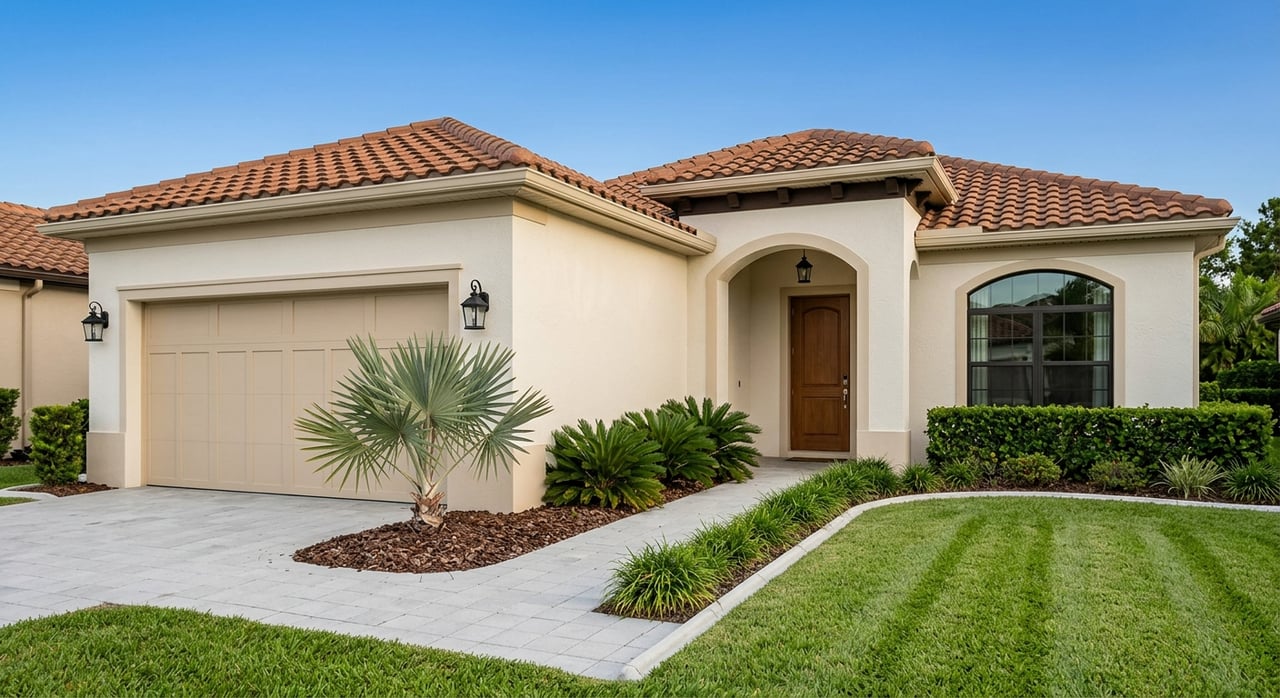
Popular directions on inland Florida lakes include Contemporary and Florida-modern interpretations that emphasize shade, overhangs, and indoor-outdoor flow. Masonry and stucco exteriors with reinforced concrete foundations and impact-rated openings are common for durability and wind resilience. Get a sense of Florida builder considerations in this Florida home builders overview.
Outdoor features and docks
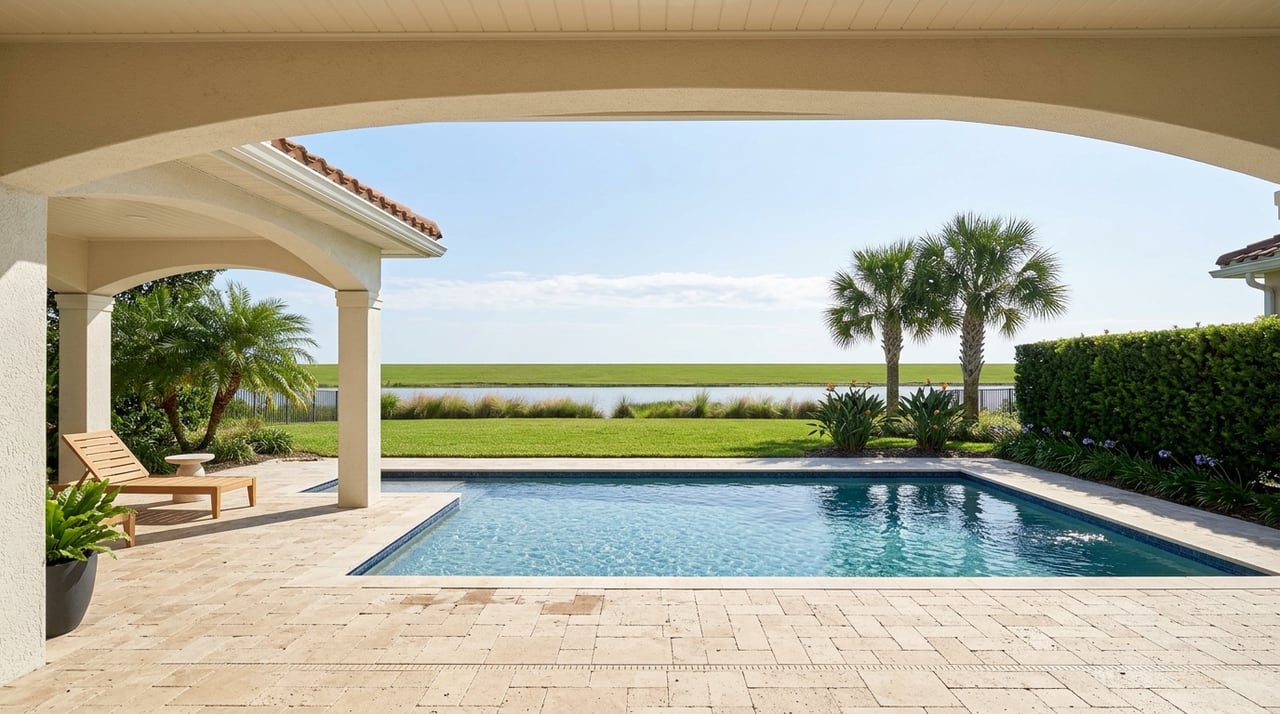
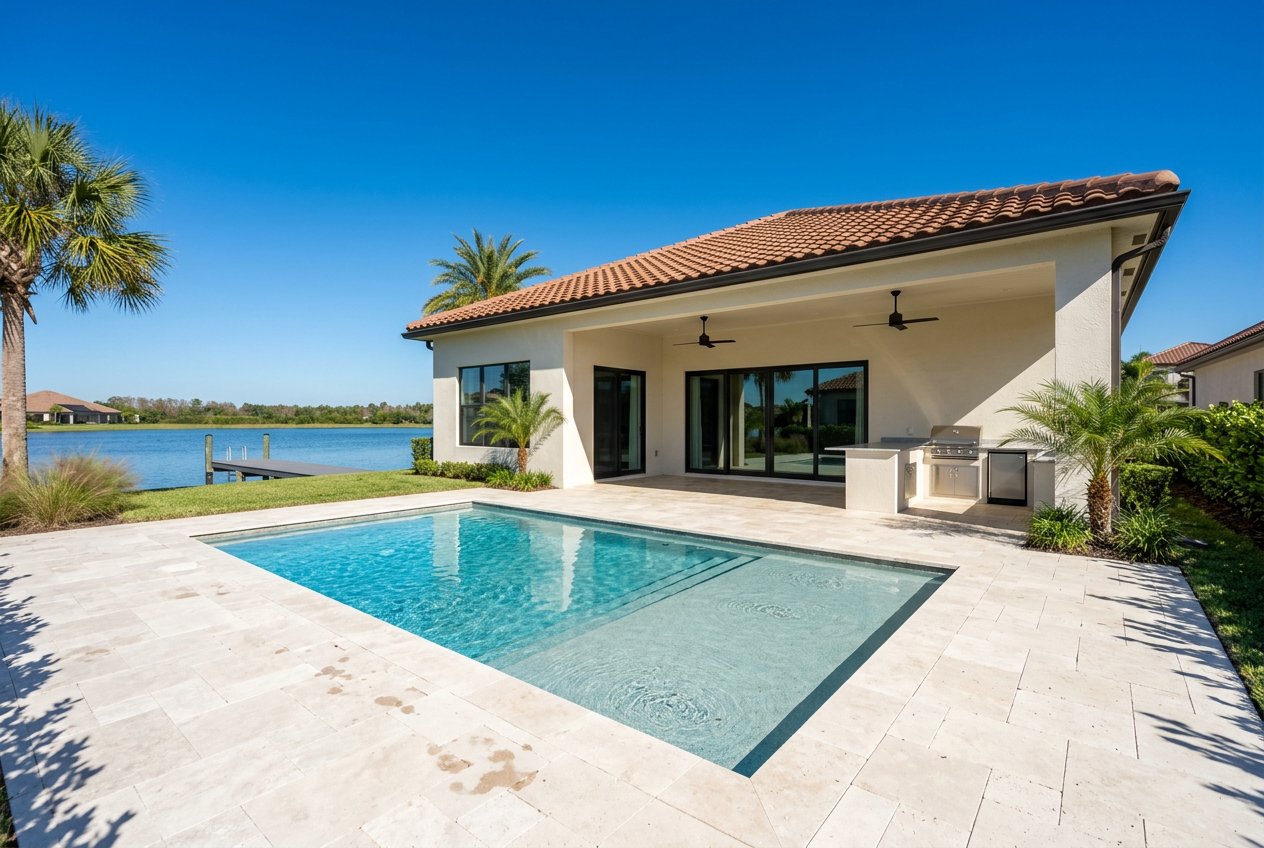
High-end lakefront living often centers on covered lanais with summer kitchens, integrated audio, and a pool or spa that faces the water. Large sliding or folding glass walls create effortless transitions to terraces and docks. Dock choices include fixed pile systems or floating elements, boat-lift sizing to match draft, and kayak or paddlecraft storage. Each choice should align with lake depth, permitting limits, and your use plan. See outdoor-living and dock-integration ideas in the Florida builders overview.
Resilience and systems
For comfort and protection, many buyers choose impact-rated windows and doors, protected or elevated mechanicals, and backup power via a whole-house generator or transfer switch. Coordinate these selections early with your MEP team to lock in service runs and avoid late-stage changes.
Buyer due diligence checklist
Use this list before you sign a lot contract or approve final plans:
- Confirm jurisdiction and permit path with the City of Lakeland or Polk County. Start with the City of Lakeland permit checklists or the Polk County permitting guide.
- Request the recorded plat, deed, CC&Rs, and any HOA or shared-access easements from the seller or developer at Water’s Edge.
- Order a boundary and topographic survey that shows the waterline and easements. Add basic bathymetry off your lot if you want a dock. The city publishes submittal expectations in its permit checklists.
- Check current lake-health advisories on the Polk Water Atlas news page.
- Commission geotechnical and, if needed, wetland or benthic surveys to inform foundations and shoreline work.
- Review riparian rights and whether state submerged lands are involved. See Florida’s Rule 18-21 overview.
- Meet with one or two custom builders to validate site constraints, outline a permitting strategy, and assemble a preliminary budget and timeline.
- Confirm utilities and any pre-power procedures with the City of Lakeland using the published forms and checklists.
- Ask if the property is in a Community Development District and request the documentation if applicable.
- Discuss construction and permanent financing with your lender, including flood-zone determinations and any elevation certificate needs.
Next steps
Building custom on the water is equal parts vision and process. When you work with a local team that understands Lake Gibson’s depth, shoreline conditions, and permitting path, you protect your timeline and budget while getting the design you want. If you are considering Water’s Edge, we can help you evaluate lots, coordinate builder introductions, and plan a clean path from survey to move-in.
Ready to walk the shoreline and start shaping your build plan. Connect with Elizabeth Willers to tour opportunities at Water’s Edge, compare lots, and map your permits and budget with confidence.
FAQs
Do Lake Gibson buyers automatically get private dock rights at Water’s Edge?
- Not automatically. Dock size and placement depend on recorded riparian rights, local permits, and state rules for submerged lands. Expect to secure city or county building permits and, if your dock extends over state bottom, a state authorization under Rule 18-21.
How long does a custom build on Lake Gibson usually take?
- Plan for 12 to 30 months from lot to move-in, including 3 to 9 months for site work and permitting followed by 9 to 18 months for construction, depending on complexity and reviews.
What extra costs should I plan for beyond the house itself?
- Separate allowances for shoreline work, dock and lift, possible dredging, surveys, soils, engineering, permit and impact fees, and landscaping are common in addition to the main construction budget.
Will I need flood insurance for a Water’s Edge home?
- It depends on your FEMA flood zone and finished-floor elevation. Your lender will require flood insurance if the structure is in a Special Flood Hazard Area, and some buyers choose coverage even outside high-risk zones.